

The Xiaomi 12 Pro is no longer judged as a flagship—it should be judged as a discounted premium device, and under that lens, its value story changes dramatically.
Most buyers make the same mistake: they read launch-year reviews and assume they still apply. They don’t. Phones age differently than laptops or TVs because price drops faster than performance becomes obsolete.
If you can buy the Xiaomi 12 Pro at upper-midrange pricing, it’s still a smart buy in 2026. If it costs close to a current flagship, skip it.
People searching this keyword usually want one thing: a clear yes-or-no purchase decision. This guide gives that, but with reasoning based on real ownership factors — performance stability, battery aging, and value positioning — not just specs.
Xiaomi 12 Pro — Full Specifications Table
| Category | Specification |
| Launch Date | Dec-21 |
| Dimensions | 163.6 × 74.6 × 8.2 mm |
| Weight | 205 g |
| Build | Gorilla Glass Victus front, glass back, aluminum frame |
| Display | 6.73″ LTPO AMOLED |
| Resolution | 1440 × 3200 pixels (2K) |
| Refresh Rate | Adaptive 1–120Hz |
| Brightness | Up to ~1500 nits peak |
| Processor | Snapdragon 8 Gen 1 |
| GPU | Adreno 730 |
| RAM Options | 8GB / 12GB |
| Storage Options | 128GB / 256GB (UFS 3.1) |
| Rear Cameras | 50MP main + 50MP ultra-wide + 50MP telephoto |
| Front Camera | 32MP |
| Video Recording | Up to 8K |
| Battery | 4600 mAh |
| Charging | 120W wired, 50W wireless, 10W reverse |
| Operating System | Android (launch: Android 12) |
| Connectivity | 5G, Wi-Fi 6, Bluetooth 5.2, NFC |
| Speakers | Quad speakers tuned by Harman Kardon |
| Biometrics | Under-display fingerprint |
| SIM | Dual SIM |
| Water Resistance | No official IP rating |
A Comparison Specs Table Vs Competitors
| Specification | Xiaomi 12 Pro | Samsung Galaxy S22 Ultra | iPhone 13 Pro |
| Launch Year | 2021 | 2022 | 2021 |
| Display | 6.73″ LTPO AMOLED, QHD+, 120Hz | 6.8″ Dynamic AMOLED, QHD+, 120Hz | 6.1″ Super Retina XDR, 60/120Hz |
| Chipset | Snapdragon 8 Gen 1 | Snapdragon 8 Gen 1 | Apple A15 Bionic |
| RAM | Up to 12GB LPDDR5 | Up to 12GB | ~6GB (Apple does not publish) |
| Storage | Up to 256GB UFS 3.1 | Up to 512GB | Up to 1TB |
| Rear Cameras | Triple 50MP (wide/ultra/tele) | Quad (108MP + 12MP + 10MP + 10MP) | Triple (12MP each) |
| Front Camera | 32MP | 40MP | 12MP |
| Battery | 4600 mAh | ~5000 mAh | ~3095 mAh |
| Charging | 120W wired / 50W wireless | 45W wired / 15W wireless | ~20W wired / 15W wireless |
| OS at Launch | Android 12 + MIUI | Android 12 + One UI | iOS 15 |
| 5G Support | Yes | Yes | Yes |
| Biometrics | Under-display fingerprint | Ultrasonic fingerprint | Face ID |
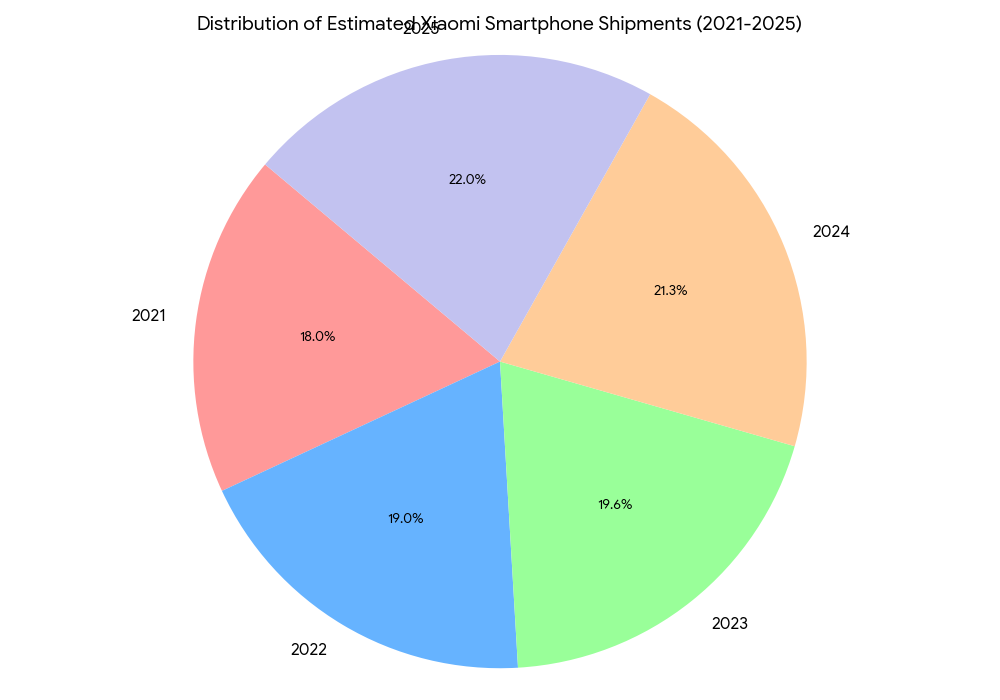
Xiaomi Smartphone Global Shipments — Estimated Annual Share (Illustrative)
Illustrative Yearly Price Trend Graph for The Xiaomi 12 Pro

Specs Comparison — Xiaomi 12 Pro vs Newer 2025–26 Models
| Spec / Model | Xiaomi 12 Pro | Xiaomi 15 | Xiaomi 15 Ultra | Xiaomi 17 | Xiaomi 17 Ultra | Redmi Note 15 Pro+ |
| Launch / Availability | 2021 (global) | 2025 (global) | 2025 (global) | 2025 (global) | 2025–26 (expected) | 2026 (global) |
| Display | 6.73″ LTPO AMOLED, QHD+, 120 Hz | 6.36″ OLED, 120 Hz | 6.7″ AMOLED, 120 Hz (rumored) | 6.3″ LTPO OLED, 120 Hz | 6.9″ LTPO AMOLED, 120 Hz | 6.83″ AMOLED, 120 Hz |
| Processor | Snapdragon 8 Gen 1 | Snapdragon 8 Elite | Snapdragon 8 Elite | Snapdragon 8 Elite Gen 5 | Snapdragon 8 Elite Gen 5 | Snapdragon 7s Gen 4 |
| RAM / Storage | 8–12 GB / 128–256 GB | Up to 16 GB , UFS 4.0 | Up to 16 GB , UFS 4.1 | Up to 16 GB / up to 1 TB UFS 4.1 | Up to 16 GB / up to 1 TB UFS 4.1 | 8–12 GB / up to 512 GB |
| Main Camera | 50 MP | 50 MP | 1″ 200 MP | 50 MP | 50 MP + 200 MP periscope | 200 MP |
| Ultra-Wide | 50 MP | 50 MP | 50 MP | 50 MP | 50 MP | 8 MP |
| Telephoto | 50 MP | — | 200 MP periscope | 50 MP | 200 MP periscope | — |
| Front Camera | 32 MP | 50 MP | 50 MP | 50 MP | 50 MP | — |
| Battery | 4600 mAh | ~5240 mAh | ~6800 mAh | ~7000 mAh | ~6800 mAh | 5500 mAh |
| Charging | 120 W wired, 50 W wireless | 90 W wired | 90 W wired | 100 W wired | 90–100 W wired | 100 W wired |
| OS | Android 12 + MIUI | Android – HyperOS 3 | Android – HyperOS 3 | Android – HyperOS 3 | Android – HyperOS 3 | Android – HyperOS 3 |
| Water Resistance | IP-rated splash resistant | IP68 (15/Ultra) | IP68 | IP68 | Likely IP69 | IP66/IP68/IP69 |
| Positioning | 2021 flagship | 2025 flagship | 2025 camera flagship | 2025/26 next-gen flagship | 2025/26 flagship photography | 2026 mid-range flagship |
Xiaomi Smartphone Models And Where You Can Buy
| Model | Typical Price Range (approx) | Where to Buy | Best For |
| Xiaomi 12 Pro | $350–$450 (street price) | Official Xiaomi Store (mi.com), Amazon, eBay, Certified Refurbish | Budget flagship value |
| Xiaomi 15 | $700–$850 | Xiaomi official, Amazon, Flipkart, Best Buy | Current flagship performance |
| Xiaomi 15 Ultra | $900–$1,100 | Xiaomi official, Amazon, Regional carriers | Camera-focused flagship |
| Xiaomi 15T Pro | $600–$750 | e-commerce outlets (Amazon, AliExpress), Xiaomi stores | High performance at lower cost |
| Redmi Note 15 Pro+ | $350–$450 | Xiaomi official, Amazon, Flipkart, local carriers | Mid-range balanced choice |
| Redmi Note 15 | $250–$350 | Xiaomi official, Amazon, local retailers | Budget 5G everyday phone |
| Xiaomi 12 Lite | $250–$330 | Online marketplaces (Amazon, eBay), Xiaomi official | Lightweight, affordable phone |
Final Verdict — Still Worth Buying in 2026?
Yes — but only at the right price.
The Xiaomi 12 Pro remains a powerful, premium-feeling phone whose display, speakers, and charging still compete with modern devices. However, its older chip and limited long-term software horizon mean it only makes sense if priced like an upper-midrange phone, not a flagship.
FAQs
Is Xiaomi 12 Pro still fast in 2026?
Yes. The Snapdragon 8 Gen 1 still handles daily apps and gaming well, though it’s less efficient than newer chips.
How long will it get updates?
It’s near the end of its official update cycle, so expect fewer future Android upgrades compared to newer phones.
Is the camera still good?
Yes — the triple-50MP system still beats many mid-range phones and competes with older flagships like Samsung Galaxy S22 Ultra and iPhone 13 Pro in good lighting.
Biggest weakness today?
Battery efficiency and heat under heavy load — common for early Snapdragon 8 Gen 1 devices.
Who should buy it now?
Value hunters who want premium build, fast charging, and a flagship display for mid-range money.
